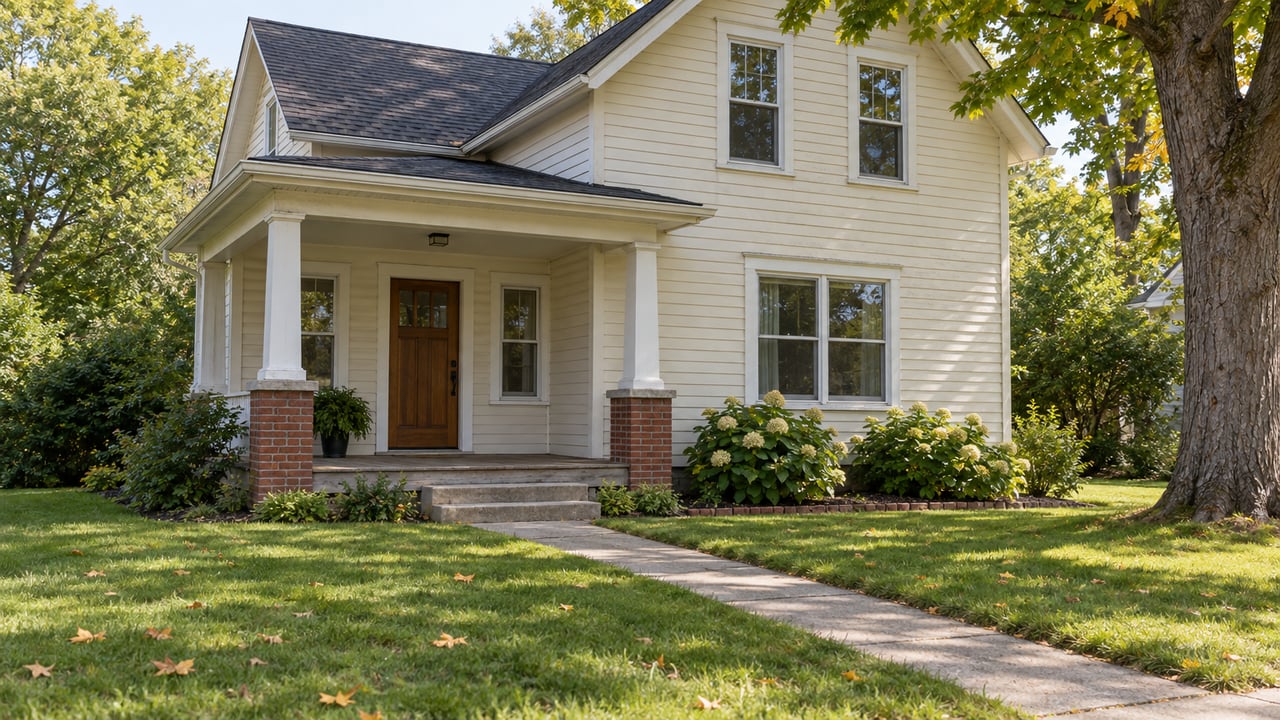
"It has been six-and-a-half years since Denmark had a library." Sarah Sugden, executive director of the Brown County Library system, said those words on September 23 while standing inside a building that used to hold toddlers and now holds most of what the village of Denmark needs to run day to day.
The number is worth sitting with. Six and a half years is long enough for a kindergartner to reach middle school without ever having had a library card issued in their own town. It is long enough for the building that once served the purpose, a shared space inside the local high school, to close under pandemic conditions in 2020 and never reopen. What came back this month is not a restoration of that old arrangement. It is a different structure entirely, and the difference is the actual story.
What the Gap Actually Cost the Village
A library closing sounds like a loss of books. In Denmark's case it was also a loss of the things that tend to live quietly inside a library without anyone naming them separately: a place to search for a job on a public computer, a meeting room for a scout troop or a school board committee, a supervised spot for a kid to sit after the bus drops them off before a parent gets home from a shift in Green Bay.
The new branch includes JobPod resources for résumé help and interview practice, the kind of service that has no obvious home in a town without a library building. That it needed a name and a dedicated desk suggests the gap was not just inconvenient. It was a service that Denmark residents had been going without or driving out of town for, quietly, for years.
OneDenmark, the nonprofit formed in 2019 to organize exactly this kind of community infrastructure, describes the founding motivation plainly on its own site: community studies found that Denmark lacked spaces to meet basic health and safety needs, and the pandemic-era loss of the library branch made that gap harder to ignore. A village this size does not have many backup options when a single shared civic space disappears.
The Math That Made a One-Dollar Building Add Up to Six Million
In October 2024, the Denmark Board of Education sold its former Early Childhood Center to OneDenmark for one dollar. That same month, the Wisconsin Department of Administration awarded the nonprofit a $4.025 million grant to renovate roughly 16,000 square feet of the building, covering the library space, an internet commons, and community meeting rooms.
The full project ended up costing about $6 million once construction got underway, which meant OneDenmark still had to raise close to $2 million on top of the state grant, with the final push toward that goal wrapping up in June of last year. Construction started that October and the building opened on schedule this September, according to the organization's own project history.
That sequence explains why Denmark's answer to a missing library looks nothing like a standalone library. A single-purpose building, built from scratch, would have needed its own capital campaign, its own site, its own operating budget. Renovating an existing 1921 schoolhouse that the district no longer needed let the state grant and the community fundraising cover shared infrastructure, plumbing, HVAC, a gym floor, a commercial kitchen space, and then split the finished square footage across five different uses instead of one. The dollar purchase price wasn't a symbolic gesture. It was the mechanism that made the rest of the budget stretch far enough to bundle services that would never have penciled out separately.
One Roof, Five Jobs
Walk through what actually opened on North Wall Street and the bundling becomes concrete rather than conceptual. The Brown County Library's newest branch carries collections for every age group, from picture books to video games, alongside the JobPod career desk. A gym and fitness center is taking paid memberships. There are dedicated spaces built for children and for teens separately, which is a distinction most small-town facilities don't bother making. And the Denmark Community Cupboard, the food pantry serving families in the Denmark School District, has its own space inside the same building rather than operating out of a church basement or a rotating volunteer's garage.
The building itself has carried civic weight since 1921, when it opened as a school. It later became the district's early childhood center before OneDenmark took it over. Three uses across a century, and now, technically, five uses at once. That kind of layering is what happens when a town decides a shared building is more sustainable than five separate ones, especially in a village where any single service, on its own, might not draw enough demand or funding to justify its own address.
What Opening Week Actually Looks Like
The ribbon cutting on September 23 ran from 3:30 to 6 p.m., with the VFW Auxiliary raising the flag and leading the national anthem before the ceremonial cut. Attendees could take a self-guided tour, sign up for a library card on the spot, register for a gym membership at the same visit, and stick around for a carnival and board games, according to a rundown from Seehafer News ahead of the event. Governor Tony Evers sent a public statement calling libraries the hearts of their communities, Wisconsin State Librarian Ben Miller described the project as having the potential to become the actual center of Denmark rather than just a building near it, and Brown County Executive Troy Streckenbach was on hand to credit the state grant with getting the project across the finish line.
For residents planning an actual visit rather than reading about the ceremony after the fact, the library's posted hours are Monday 10 a.m. to 2 p.m., Tuesday and Wednesday 2 to 6 p.m., Thursday 11 a.m. to 2 p.m., and Friday 1 to 5 p.m. The gym desk and the library circulation desk sit close enough inside the same building that picking up a library card and signing up for a fitness membership can happen in the same short visit, without a second stop anywhere else on Wall Street.
A town that can turn a one-dollar building into five kinds of services in under two years is telling you something about how it plans for the people who already live there. If you're weighing what that kind of civic investment says about Denmark's direction, or want to talk through what it might mean for a home you're considering here, Corissa Brice is glad to walk through it with you. Let's Connect.